
Introduction
Robotic gait training is changing the way people recover from walking problems. This advanced physiotherapy technology uses robots to help people walk again. As a result, many patients now have new hope for better movement. Robotic gait rehabilitation is becoming more common in clinics and hospitals. It helps people who have trouble walking due to injury or illness. In this blog, you will learn how robot-assisted walking therapy works and who can benefit from it.
What is Robotic Gait Training?
Robotic gait training is a type of therapy that uses machines to help people walk. These machines support the body and guide the legs in a natural walking pattern. Because of this, patients can practice walking safely and often. The robots can adjust to each person’s needs. For example, they can change speed or support level. This makes therapy safer and more effective for many people.
Who Can Benefit from Robotic Gait Training?
Many people can benefit from robotic gait rehabilitation. For instance, it helps those who have lost the ability to walk due to:
In addition, older adults with weak muscles may also benefit. Children with walking problems can use this therapy as well. However, not everyone is a good fit. A physiotherapist can help decide if this therapy is right for you.
How Does Robotic Gait Training Work?
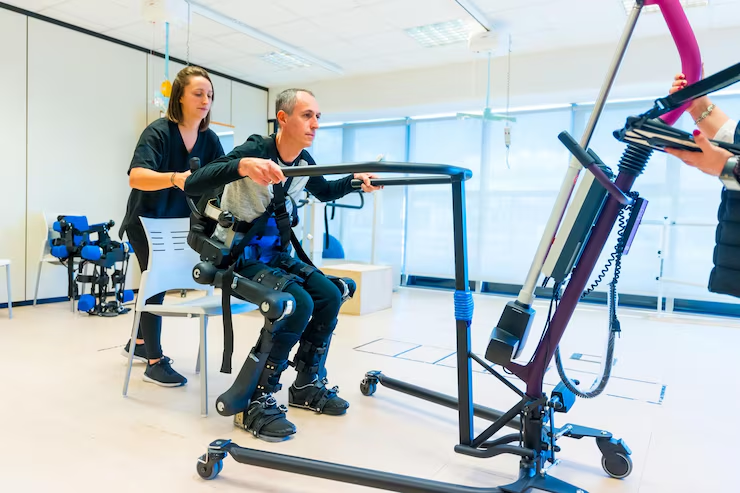
During robot-assisted walking therapy, a person wears a special harness. This harness supports their weight and keeps them safe. Next, the robot attaches to the legs and guides them in a walking motion. The machine can change how much help it gives. For example, it may offer more support at first and less as you get stronger. Sensors track your progress and give feedback to both you and your therapist. Because of this, therapy can be adjusted to fit your needs.
Key Benefits and Potential Risks
Robotic gait training offers many benefits. Some of the main advantages include:
However, there are some risks. For example, skin irritation or discomfort may occur from the harness. Rarely, people may feel tired or dizzy. It is important to have a trained therapist present at all times. According to studies in peer-reviewed journals, most people tolerate this therapy well. Still, always talk to your doctor before starting any new treatment.
What to Expect During a Session
At the start, your therapist will help you put on the harness and connect to the robot. Then, you will begin walking with the robot’s help. Sessions usually last 30 to 60 minutes. The robot may adjust support as you improve. Your therapist will watch closely and make changes as needed. After the session, you may feel tired but should not feel pain. Over time, you may notice better balance and walking ability.
Latest Advances and Research
New research shows that robotic gait rehabilitation can help people recover faster. For example, studies in journals like PubMed show improved walking speed and strength. Some robots now use virtual reality to make therapy more fun. Others use smart sensors to track every step. Because of these advances, therapy is becoming more effective and enjoyable. The World Health Organization supports the use of safe, proven technology in rehabilitation.
Tips for Maximizing Results
With regular practice and support, many people see great results from robot-assisted walking therapy.
Frequently Asked Questions
Conclusion and Next Steps
Robotic gait training is a powerful tool in modern rehabilitation. It helps many people regain movement and confidence. If you or a loved one has trouble walking, this advanced physiotherapy technology may help. Consult a qualified physiotherapist at Nexen Health Care to learn if robotic gait training is right for you.